Riding Beyond the Sunset: The Whitewashed History of The Black American Cowboy
The West, a place of endless, panoramic vistas, created larger-than-life men and women who conquered the land and forged a nation. Yet the golden age of Western TV shows and movies (1950s-1960s) depicted mostly White men fighting the Injuns, wild animals and the wilderness to achieve Manifest Destiny, spreading this nation from sea to shining sea.
More recently, the country music of Beyoncé, Little Nas X, Shaboozy, and the release of Westerns featuring more African American-themed stories, are prompting viewers and critics to analyze whether and when Black people had a place in that imagined land.
For much of the nation’s history, people believed the West meant opportunity and adventure. Real and fictitious characters stock our collective consciousness: The White soldier, the savage Injun, the White gunfighter, the White pioneer, the White mountain man. One of the most enduring images is the White cowboy roaming vast open spaces, herding longhorn steers down dusty trails, crooning in the day’s waning hours, lulling the cattle to sleep.
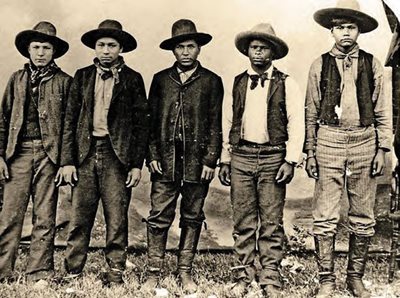 What’s wrong with this picture? Early Western historians did not value either African Americans or their roles in the West’s settlement, nor did Hollywood producers and directors, who based their movies on the discriminatory works of those researchers. The western genre was deliberately made to distort history, but, in deference to the industry’s economic, marketing and production values, its 100-year-old longevity is also due to its profitability. However, the historical accuracy of westerns is a legitimate concern, one that cannot be dismissed through appeals to aesthetic or financial notions.
By 1880, more than 15,000 Black migrants had arrived in the Western lands, and one-third of the 35,000 cowboys who rode the cattle trails (18661895) were Black and Mexican. The absence of African American cowboys can be attributed to early historians who followed in the footsteps of Frederick Jackson Turner, the father of Old West historiography. Turner’s The Frontier in American History argues that purebred Americans, clad in the buckskins of rugged individualism, democracy and nationalism, conquered the savage West and became the genesis of Hollywood’s White cowboy.
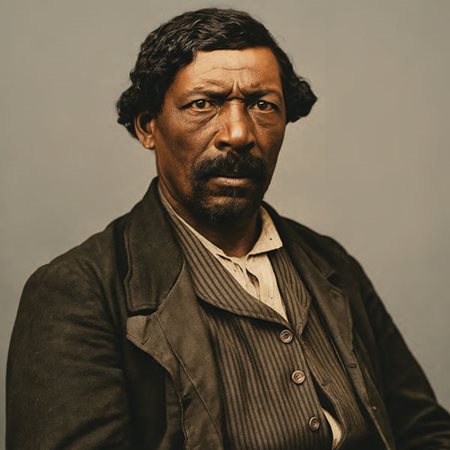 For the last 30 years, New Western historians, working on a revisionist, multicultural history of the frontier, sought to give credit to all who settled the West. Although Blacks helped to found Los Angeles (Juan Francisco Reyes, a mulatto settler, served as elected mayor of Los Angeles in 1783), and San Francisco (William Leidesdorff, Jr., America’s first Black millionaire, and the first African American diplomat, was one of California’s Black founding fathers), discovered major passes through the Sierra Nevada Mountains and established trading posts (James Beckwourth), ate the dust of trail drives (Bill Pickett), broke the law (Rufus Buck Gang) and kept the law (Bass Reeves), they had few roles in the Hollywood western.
Leah Williams in The Atlantic wrote that Hollywood is an excellent whitewasher of Old West history. When Hollywood depicted the story of James Beckwourth in the 1951 movie Tomahawk, Jack Oakie, a white man, starred as the famous Black trapper. Reeves, the first Black man to serve as a Deputy U.S. Marshal patrolling the lawless Indian Territory in Oklahoma, parts of Arkansas, and Texas, is believed to be the model for the Lone Ranger. Britt Johnson, a Black cowboy and landowner in Texas, who rescued his wife and children from the Comanche in 1865, served as a partial model for the John Wayne character in John Ford’s classic film The Searchers, almost a century later.
Those who want to write about Blacks in the West must research to voice a mostly untold narrative. According to a 2014 article in The New Yorker, stories told about Black westerners must fit them into the frontier narrative despite the real history that “one in four cowboys working during the golden age of westward expansion was Black; many others were Mexican, mestizo, or Native American — a far more diverse group than Hollywood stereotypes of the cowboy would suggest.”
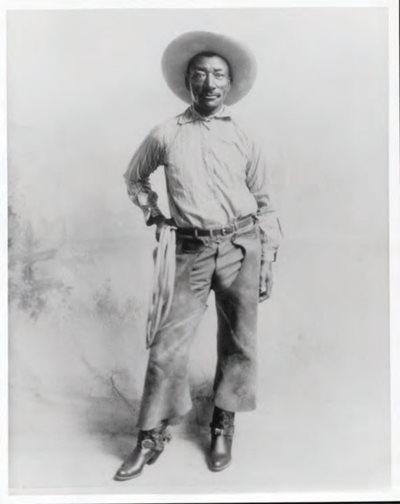 Yet the myth of the Hollywood cowboy, beginning with 19th-century dime novels, told the story of White men. In a Harper’s article (1895), Owen Wister, author of the first best-selling western novel, The Virginian: A Horseman of the Plains (1902), wrote that American cowboys were descended from the Anglo-Saxon race and went West to test their courage. The white supremacist overtones of the early Western movies gave citizens and immigrants White male heroes who mirrored this country’s patriotic blend of American exceptionalism.
There are other reasons for the Black cowboy’s early absence from the silver screen. According to Richard Slotkin, the frontier myth, with its exclusionary tenets, romanticized the “White male adventurer as the hero of national destiny. The mythical West mostly held firm until the 1940s, when, during WWII, Black actors appeared in Hollywood westerns as comic-relief cowboys and buffoons, as slaves who accompanied their masters to the West, and in other secondary roles. The post-war 1950s did not improve the prospects of Black actors seeking roles in westerns. It wasn’t until John Ford cast Woody Strode in Sergeant Rutledge (1960) that a Black man earned the first starring role in a Hollywood western.
In the latter part of the 20th century and the early 21st century, Hollywood attempted to do better, but sadly, it was merely a recasting of the same tropes in different stories. The West’s hidebound history consistently portrayed it as a White land of opportunity. Although the region once supported all-Black towns and legions of freed slaves seeking the same right to breathe free, to establish homes, and find a life in a country where none thought they belonged, that history is still elusive, still being told, piece by piece, movie by movie.